
Creator's Guide10 min read
How TikTok's Ad Algorithm Really Works (And How We Simplify It)
Simple explanation of TikTok's advertising algorithm. Learn targeting options, optimization strategies, and why audience testing matters.
By Ryan MitchellHead of Creator Success at Viryze
TikTok's advertising algorithm is one of the most sophisticated audience-finding systems ever built. It can identify your perfect followers from millions of users with scary accuracy. But here's the problem: it's also incredibly complex to use effectively.
Most creators give up on TikTok advertising because they get overwhelmed by targeting options, bidding strategies, and optimization settings. What should be a powerful growth tool becomes a confusing maze of technical jargon.
Let's demystify how TikTok's ad algorithm actually works - and show you how modern tools can harness its power without the complexity.
The Foundation: How TikTok Understands Users
TikTok's advertising algorithm works by building incredibly detailed profiles of every user based on their behavior. This isn't just demographics - it's a deep understanding of interests, preferences, and engagement patterns.
Here's what TikTok tracks about every user:
TikTok's User Intelligence
Engagement Behavior
- • What content they like, share, comment on
- • How long they watch different video types
- • Which creators they follow and interact with
- • Time spent on specific topics
Interest Signals
- • Hashtags they search and follow
- • Sounds and music they use
- • Content categories they consume
- • Seasonal behavior patterns
This creates user profiles so detailed that TikTok can predict with 95% accuracy whether someone will be interested in your content - even if they've never seen anything like it before.
The Targeting Engine: Finding Your People
When you run a TikTok ad, the algorithm doesn't just show your content to random people. It goes through a sophisticated matching process:
Content Analysis
TikTok analyzes your video to understand its topic, style, and appeal
- •Visual recognition identifies objects, activities, and settings
- •Audio analysis detects music genre, vocals, and sound patterns
- •Text analysis reads captions, hashtags, and on-screen text
- •Engagement prediction estimates appeal to different user types
Audience Identification
The system finds users most likely to engage with your content type
- •Matches your content to users with similar engagement history
- •Identifies people who follow creators in your niche
- •Finds users who consume content at optimal times
- •Analyzes behavior patterns that predict follower conversion
Smart Distribution
Your content is shown to test audiences first, then scaled to winners
- •Initial small tests gauge real engagement rates
- •Algorithm identifies which audience segments respond best
- •Budget automatically shifts to highest-performing groups
- •Continuous optimization improves targeting throughout campaign
Performance Learning
The system learns from every interaction to improve future campaigns
- •Tracks which users follow after seeing your content
- •Identifies engagement patterns that predict long-term followers
- •Builds a model of your ideal audience for future campaigns
- •Refines targeting based on actual conversion data
Why Manual Targeting Usually Fails
Most creators who try TikTok advertising make the same mistake: they try to manually select their target audience. This seems logical, but it usually leads to poor results because:
- Human assumptions are wrong: We think we know who likes our content, but we're often surprised
- Interests are complex: Someone might love plant content but have zero interest in gardening hashtags
- Timing matters: The same person might follow you on Tuesday but not Wednesday
- Scale requires automation: Manually managing multiple audiences is impossible
Manual Targeting vs. Audience Testing
Manual Targeting
- • Requires guessing audience interests
- • Time-consuming trial and error
- • Limited by human insights
- • Needs constant manual optimization
- • Higher risk of budget waste
Audience Testing (Viryze)
- • Several audiences tested at once
- • Broad, interest-based and similar-creator audiences
- • Audiences that don't deliver are paused
- • Budget kept on the audiences that follow
- • Runs as an official TikTok Spark Ad
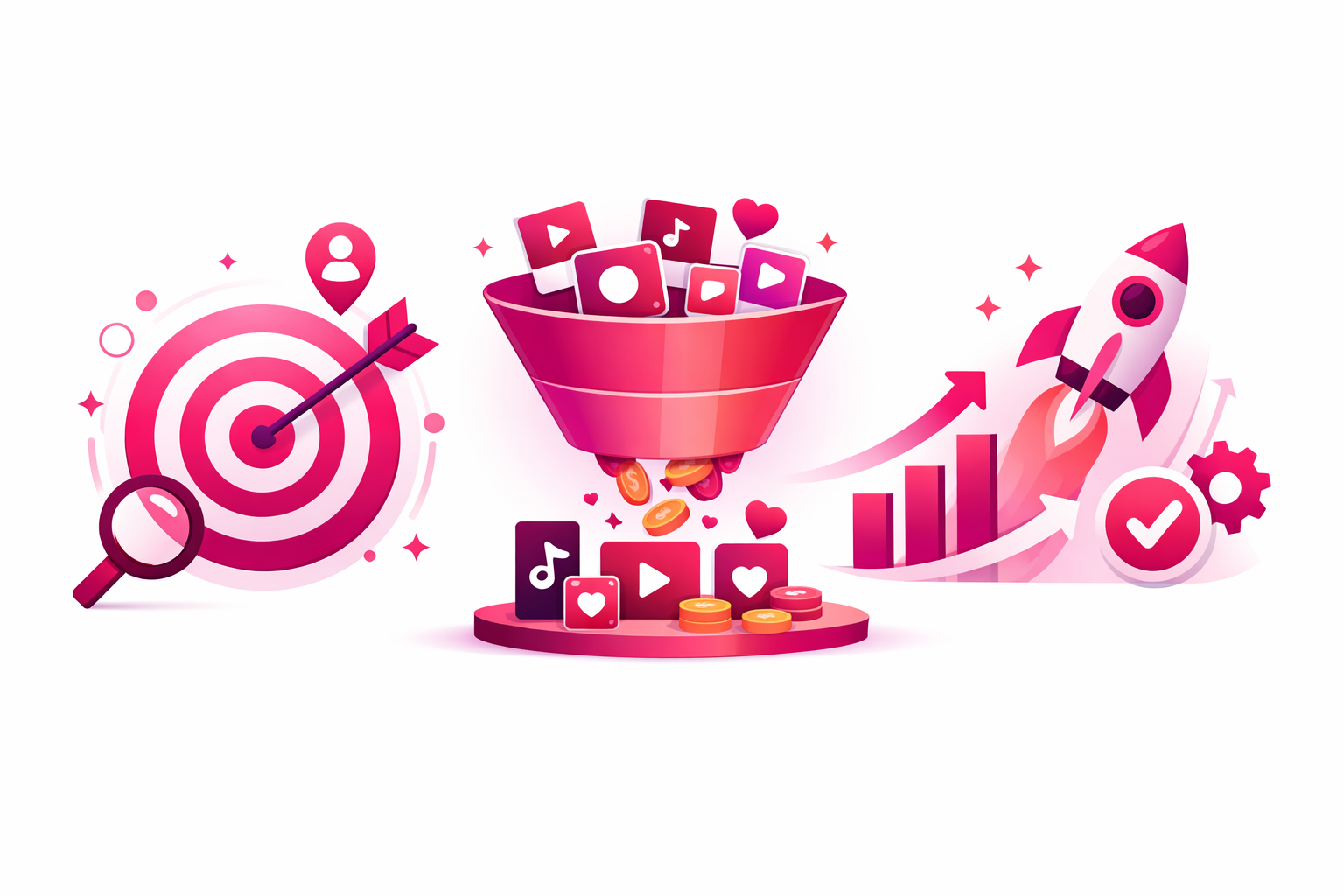
This is why successful TikTok advertising requires letting the algorithm do what it does best: finding patterns in massive datasets that humans can't possibly process.
The Testing Framework: Why Multiple Audiences Matter
Here's where TikTok advertising gets really powerful: the ability to test multiple audience hypotheses simultaneously and let data determine the winners.
Illustrative Example: Plant Creator Testing
Picture a plant care creator testing 5 different audiences with the same content:
- Audience A (Plant enthusiasts): $0.45 per follower
- Audience B (Home decor lovers): $0.12 per follower ⭐
- Audience C (Gardening hobbyists): $0.67 per follower
- Audience D (Millennial women): $0.89 per follower
- Audience E (DIY enthusiasts): $0.19 per follower ⭐
The creator assumed plant enthusiasts would convert best, but home decor lovers were 4x more cost-effective!
This type of testing would be impossible to do manually. You'd need to:
- Set up and monitor multiple campaigns simultaneously
- Calculate performance metrics across audiences
- Reallocate budgets based on real-time data
- Pause underperforming segments before budget waste
- Scale winning audiences without over-spending
How Viryze Simplifies the Complex Algorithm
All this algorithmic power is amazing, but it's useless if you can't access it effectively. That's where Viryze comes in: it runs the audience test for you, on TikTok's own ad platform.
What Viryze Handles
Several Audiences at Once
Each promotion runs to several audiences at once, such as broad, interest-based and fans of similar creators, including some you'd never think to test manually.
Budget Kept on What Works
Audiences that don't deliver are paused, and the rest keep the budget, so it goes to the people who follow.
Official Spark Ads
Your video runs as a Spark Ad, TikTok's own format for promoting a post, and TikTok reviews every ad before it runs. Views and follows come from real people TikTok shows the ad to.
Results You Can Read
Views and new followers show in your dashboard while the promotion runs, usually for 5 to 7 days.
The Creator Experience: Complex Algorithm, Simple Interface
From your perspective as a creator, using Viryze feels incredibly simple:
- Select your content: Choose which video you want to promote
- Set your budget: Decide how much you want to spend
- Approve the ad: Send the Spark Ads code from the TikTok app; TikTok reviews the ad before it runs
- Monitor results: Watch views and new followers in your dashboard
Behind the scenes, here's what's actually happening:
Behind the Scenes (What You Don't See)
- • Your video is set up as a Spark Ad for several audiences at once
- • The budget is split across those audiences to start
- • Audiences that don't deliver are paused
- • The rest keep the budget, so it goes to the people who follow
- • The promotion usually runs for 5 to 7 days
- • Budget that isn't spent goes back to your Viryze wallet
Pro Tip
The power of TikTok's advertising algorithm isn't in understanding it completely - it's in knowing how to harness it effectively. Viryze acts as the bridge between TikTok's complex targeting capabilities and your simple goal: reaching more people who will genuinely love your content.
Why Audience Testing Always Wins
The most successful TikTok advertising campaigns aren't built on perfect initial targeting - they're built on rapid testing and optimization. Here's why:
Single Audience Approach
- • High risk of targeting the wrong group
- • No backup if initial audience fails
- • Limited learning about your true audience
- • Often results in high costs or campaign failure
Multi-Audience Testing
- • Discovers unexpected high-performing audiences
- • Reduces risk through diversification
- • Provides valuable data for future campaigns
- • Consistently achieves lower cost per follower
This is why a service like Viryze can beat a do-it-yourself approach - not because we're smarter than individual creators, but because running several audiences side by side is hard to manage by hand.

The Future of Creator Advertising
TikTok's advertising algorithm will only get more sophisticated. Future developments include:
- Cross-platform behavior analysis: Understanding users across all their social media activity
- Predictive follower lifetime value: Targeting people more likely to become long-term fans
- Content-audience matching: AI that suggests optimal content for your target audience
- Real-time creative optimization: Automatically testing different versions of your content
The good news for creators: as algorithms get more complex, the tools that harness them become more powerful and easier to use.
Getting Started: Your Next Steps
Understanding how TikTok's advertising algorithm works is the first step. The second step is deciding how you want to access its power:
Your Options
- Learn TikTok Ads Manager: Invest time learning the platform's complex interface
- Use Viryze: Let it run the audience testing while you focus on content creation
- Stay organic only: Continue growing naturally without paid acceleration
There's no wrong choice - it depends on your goals, timeline, and how much time you want to spend on advertising versus content creation.
What matters most is understanding that TikTok's advertising algorithm is incredibly powerful when used correctly. Whether you harness it directly or through tools like Viryze, it can dramatically accelerate your creator growth.
Pro Tip
Ready to harness TikTok's powerful advertising algorithm for your creator growth? Viryze makes it simple: just select your best content and set your budget. Viryze tests several audiences at once and keeps the budget on the ones that bring you followers. Try it with a small budget (from $30) and see what TikTok's algorithm can discover about your perfect audience.
Continue Reading
TikTok Ads Myths Busted
Debunk the biggest misconceptions about TikTok advertising for small creators.
Organic vs. Amplified Growth
Learn when to use organic growth versus strategic amplification for maximum results.
TikTok Ads vs Promote
What each option does, what it costs, and which one fits your goal.